llms

Video MCP Server for AI Video Generation in Any Agent By Viddo AI

Video MCP server lets ChatGPT, Claude, Cursor, Gemini, Grok, and other AI agents generate AI video, images, and audio through the Model Context Protocol. That means one remote server and no API code to write.
1

Copy the Viddo MCP URL

Copy the Viddo MCP server URL. You will need it in the next step.

https://mcp.viddo.ai/mcp

2

Add Viddo to Grok

Open the page below and click New Connector, then Custom. Name it Viddo, paste the URL, and click Add Connector.

3

Connect and Start Creating

Sign in with your Viddo account and approve the connection. Then ask Grok to generate and edit images, videos, and audio.

Verify the connection

Please call viddo_list_models and list the models available on my account.
Full Grok setup guide →

What is Video MCP?

A video mcp is a remote Model Context Protocol server that exposes AI video generation, image generation, and audio generation as tools that an AI agent can call from an ordinary chat window or code editor. Your agent reads the live model list, estimates the credit cost, and creates the job only after you approve it.
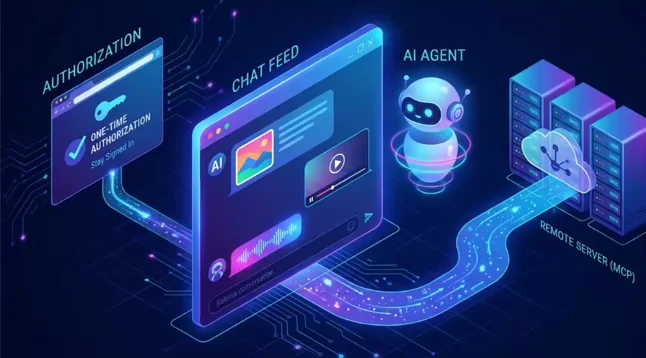

Instead of copying API keys into a config file, you authorize once in the browser with your Viddo AI account. Every compatible client on that machine stays signed in, and the finished clip comes back as a link inside the conversation where you asked for it.

That shift matters most for teams who already plan inside ChatGPT, Claude Code, or Cursor. Instead of exporting a prompt into a separate media dashboard, then downloading the file, then re-uploading it into the project, the asset is produced by the same thread that scoped the work.
AI Image to Video Ads

Key Features of the Viddo AI Video MCP

Authorize in the Browser, No API Key to Manage
You sign in with your account and approve the requested permissions. There is no key to create, copy, rotate, or paste into a config file, and nothing to leak if a shared machine changes hands. Once the browser sign-in completes, every compatible client on that machine keeps the connection.
Authorize in the Browser, No API Key to Manage
One Connection Exposes 40+ Video, Image, and Audio Models
A single server covers the full catalog. Your agent reads the live model list and selects a compatible option instead of guessing names, and you can still name a model yourself when you want a specific look. The video lineup includes Seedance 2.5, Seedance 2.0, Kling 4.0, Wan 3.0, Happy Horse 1.1, Pixverse V6, Grok Imagine, and Google Veo 3.1.
One Connection Exposes 40+ Video, Image, and Audio Models
The Agent Estimates Cost and Waits for Your Approval
This is the part most video mcps leave out. Before anything is created, the agent reads your remaining credits, estimates the cost of the exact model and parameters you described, and stops. Nothing runs and nothing is charged until you confirm the model, the parameters, and the number. Ask for the estimate once, at the start of the session, and the agent holds that behavior for every shot that follows.
The Agent Estimates Cost and Waits for Your Approval
Failed Jobs Do Not Charge You Twice
When a job fails, the agent reports the failure and the request ID instead of quietly resubmitting with different parameters. A retry that reuses the same request reuses the same job, so a timeout or a re-sent message does not turn into a second charge.
Failed Jobs Do Not Charge You Twice
Batch Tasks and Asynchronous Polling
Video generation takes time, so the job runs in the background and the agent polls the status until the asset is finished. You can submit several tasks in one request, get a separate status for each, and keep working while they render. Finished files arrive as links the agent can reference, download, or drop into the project you are already in.
Batch Tasks and Asynchronous Polling
Reference Images and Video References Stay Consistent
Reference images and reference videos carry a product or a character across shots, so a ten-shot sequence does not drift on the third take. The agent reads the model fields first and tells you what that particular model accepts, instead of silently dropping a reference the model cannot use. That check is the difference between a consistent sequence and a set of unrelated clips.
Reference Images and Video References Stay Consistent

How to Use the Video MCP on Viddo AI

  • Step1

    Copy the Viddo MCP URL

    The endpoint is one address for every client. Copy it once, and you can paste the same string into ChatGPT, Claude, Cursor, or any other MCP-compatible tool.

    Copy the Viddo MCP URL:https: //mcp.viddo.ai/mcp
  • Step2

    Add the Server to Your Client

    Open the MCP settings in your client and create a new server entry. Paste the URL above, choose Streamable HTTP as the transport, and leave authentication on OAuth. Most clients register themselves automatically, so there is no client ID or client secret to fill in. The exact menu path differs per client, and the configuration snippets below cover the common ones.
  • Step3

    Sign In and Approve the Permissions

    Your agent opens the browser to the sign-in page. Log in with your account and approve the requested permissions. The browser returns you to your client, and the tools appear under the Viddo entry. Approval happens once per client, so a second client asks for its own sign-in but not a second account.
  • Step4

    Verify the Connection and Send Your First Request

    Ask your agent to confirm the link before you generate anything. This check takes one round trip and saves a failed render later.

    Connect and Start Creating:Please call viddo_list_models and list the models available on my account.

    If the list comes back, the connection works. Then ask for a track, approve the credit estimate, and wait for the result to land in the conversation. If the tool list stays empty, the browser approval did not complete, and re-adding the server usually clears it.

Sample Agent Prompts for Video MCP

These go straight into any connected client. Each one describes the shot, the motion, and the check before spending.
Slow push-in on a bottle in soft studio lighting

Generate a Product Video From a Prompt

Generate an 8-second vertical product video: a slow push-in on the bottle, soft studio lighting, clean background, premium commercial look. Tell me which model you would use and how many credits it costs before you start.
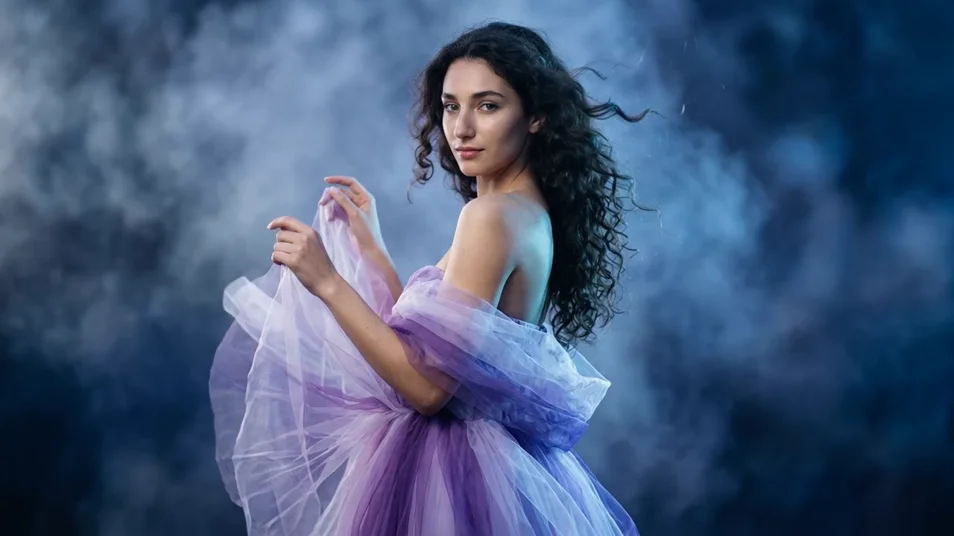
Photo animated with slow camera movement and natural hair motion

Animate an Existing Still

Turn the uploaded photo into a 5-second video with slow camera movement and natural hair motion. Keep the face and the product identical to the reference. Show me the estimated cost first.

Uploaded clip restyled as cinematic motion graphics

Restyle an Existing Clip

Restyle the uploaded video into a cinematic motion graphics sequence. Keep the original pacing and shot order, but replace the look with clean editorial graphics.
Abstract motion graphics paced to a music track

Build a Clip Around a Track

Create a 15-second music video for the uploaded audio. Use abstract motion graphics with a slow build, and match the pacing to the beat.

Matte black smart speaker on a concrete surface

Generate a Still Hero Image

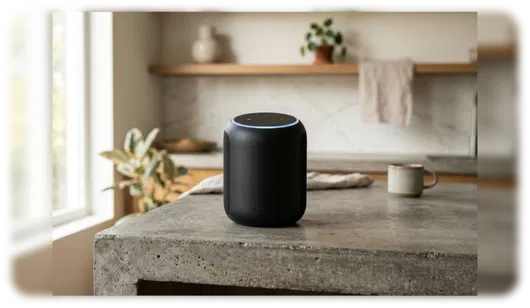
Generate a product hero image for a matte black smart speaker on a concrete surface, soft gradient lighting, 3:2 aspect ratio. Show me the model options and the credit estimate before generating.
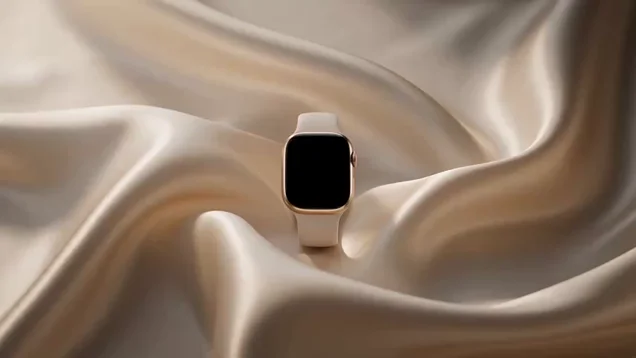
Warm product voiceover for a wireless earbud launch

Voice the Result

Write and generate a 30-second warm product voiceover for a wireless earbud launch. Conversational, confident, no jargon. Then check the audio duration before exporting.

Video MCP FAQ

1

Which AI apps can connect to a video mcp?

Any client that supports a remote MCP server over Streamable HTTP. On Viddo AI that covers ChatGPT, Claude, Claude Code, Grok, Gemini, Gemini CLI, Cursor, VS Code, Codex, Cline, Zed, OpenCode, Microsoft Copilot Studio, OpenClaw, and more.

2

Do I need an API key to use a video mcp?

No. With this server you authorize with your account through the browser, and the client handles the OAuth exchange automatically. Nothing gets written into your config file, so there is no key to rotate when a teammate joins or leaves.

3

How does billing work for AI video generation over mcp?

MCP jobs use your existing credits, the same balance as the web app. Your agent can read the balance and estimate a job before it creates anything, and generation only starts after you approve the model, the parameters, and the credit cost. The same rules apply whether the request arrives through an MCP server for video generation or through the web app.

4

Can my agent choose the video model for me?

Yes. The agent reads the live model list and the parameter rules, then recommends a compatible option, so you can describe 'a slow push-in on the bottle' instead of naming a model. You can still name one directly when you want a specific look. The full AI video model catalog shows what is available on the platform.

5

Can I use reference images and reference videos?

Yes, on the models that support them. Upload the reference through your client and the agent reads the model fields first to confirm what that particular model accepts, so a request never fails on a parameter that model does not have. For a multi-shot sequence, that check is what keeps the product or the character consistent from the first take to the last.

6

Can a video mcp generate audio and images too?

Yes. Text to speech, voice cloning, music generation, and sound effects are available over the same connection alongside the video and image models, so one connection covers the full asset set for a project. The video workflow is covered in detail on this page, while the music MCP server and image MCP server guides take each of those deeper.

7

How do I get the finished result?

On clients that support rich responses, the generation card updates in place. On text-only clients, the agent polls the task and returns the finished download links. Signed links expire, so ask the agent to query the task again when an old link stops opening.

8

Can I use the output commercially?

Yes. Every plan includes commercial use and no watermarks, so a generated clip is cleared for ads, social, and client delivery. If a creation fails, you can request a refund or get the used credits back, and the failure never becomes a silent second charge on your next invoice.
Pro Tips for Using a Video MCP

Ask for the credit estimate before the first job of a session, then reuse that estimate for variations.
Name the model when you need a specific look, and leave it open when you want the agent to choose.
Keep one request per variation so a single failure does not lose the whole batch.
Poll a running task instead of resending the message, so the same request is not billed twice.
If a link stops opening, query the task again rather than regenerating from scratch.
Connect several clients freely, since each holds its own token while they share one credit balance.

Discover More

Get Started with the Video MCP on Viddo AI

The full Viddo AI catalog now answers to the same agent that plans your work. Sign in once with your account, approve the credit estimate when your agent shows it, and start creating on your next message.
Get Started with the Video MCP on Viddo AI
viddo.ai

Viddo AI is an advanced all-in-one AI video and image generation platform that lets you quickly and easily create stunning videos and images from various inputs. These AI Model powered by Google, OpenAI, Grok AI, ByteDance, Alibaba, Kling, Runway, Vidu, Minimax, Elevenlabs, Midjourney,and so on.

© 2026 viddo.ai. All rights reserved.